Pull up the houses-for-sale listings for Point Loma Heights and you'll see a range: homes listed from $1,195,000 up to $4,500,000, as of April 2026. Scroll down the same page and the site tells you the neighborhood's median home price is $850,000.
That number is lower than every house listed above it.
It isn't a typo. Check the condo page for the same neighborhood, as of August 2026, and you'll find the reverse problem: condos listed from $329,000 to $825,000, sitting under a median figure of $897,000, a number that sits above every condo on the page. The townhome page, as of July 2026, splits the difference, at least on the surface, showing townhomes from $639,000 to $1,775,000 against a median of $843,000. That one looks plausible until you notice the average sale price quoted right next to it: $1,153,944, closer to the top of the townhome range than the middle.
This isn't one bad data pull. The same mismatch showed up in April, again in July, and again in August 2026, across three separate property-type pages. What's happening is simple once you see it: these sites are pasting a single neighborhood-wide median and average onto every search, regardless of whether you filtered for condos, townhomes, or detached houses. If you're comparing Point Loma Heights to another San Diego neighborhood using the headline number, you're not comparing apples to apples. You're comparing a blended average of three very different housing products to whatever the other neighborhood's blend happens to be.
What the Median Is Actually Averaging
Point Loma Heights isn't one housing stock wearing one price tag. It's at least three, stacked by elevation and era.
At the entry point sits Point Loma Villas, a 128-unit midcentury condo complex finished in 1966, its one-bedroom units selling in the $457,975 to $515,000 range and two-bedrooms between $550,000 and $615,000. A short walk away, larger communities like Sea Colony, a 270-unit townhome complex with a clubhouse, heated pool, and tennis courts that sits on the border of Point Loma and Ocean Beach, anchor the middle band, the same band that pushes the townhome page's overall range from $639,000 up to $1.775 million.
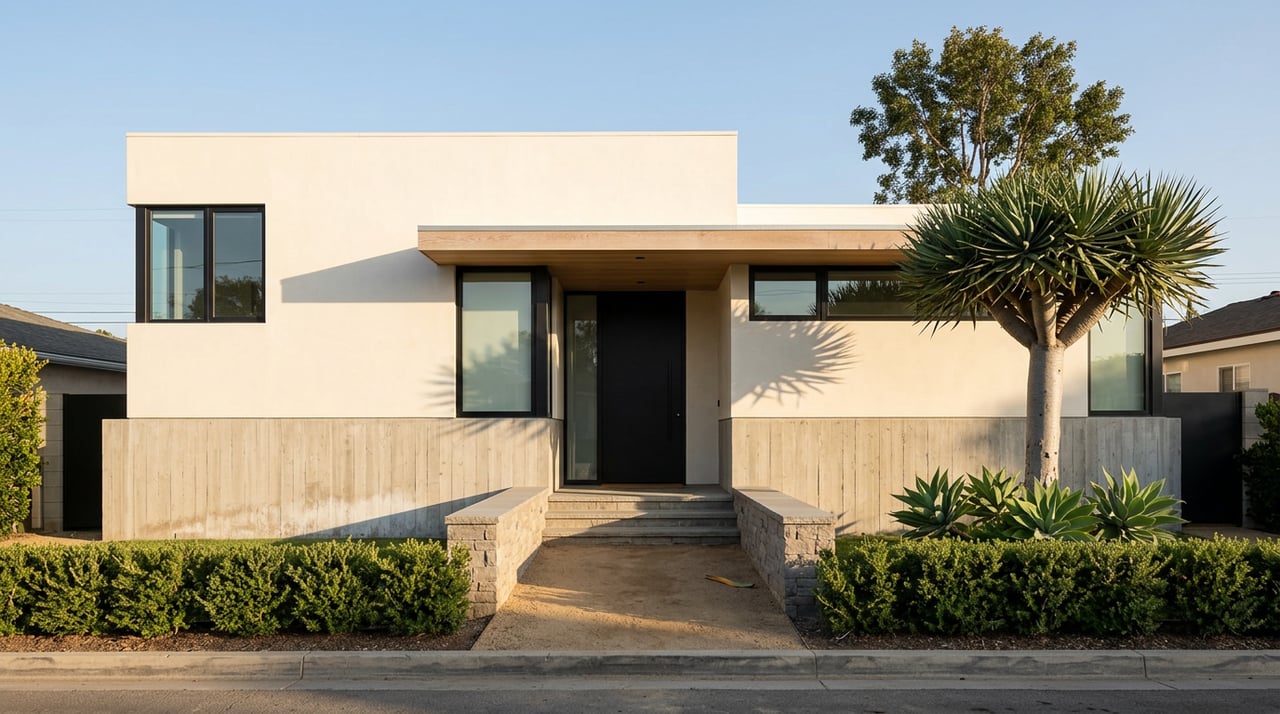
Then there's the hillside. Point Loma Heights is described by its own market listings as hilly streets lined with palms, where single-family homes in Craftsman, American Colonial Revival, and Spanish styles sit alongside newer custom builds, many with sweeping ocean views. One 2022-built custom home listed on the neighborhood's houses-for-sale page this year had a 4-bedroom, 3.5-bath main house plus a 1-bedroom, 1-bath guest house configured as an ADU, a rooftop deck with 360-degree sightlines, and ocean views from the primary balcony. That's the top of the range, and it's the segment doing the heavy lifting on the average.
Three markets. One label. If your budget is $850,000, you need to know which of those three you can actually compete in, because the answer is almost certainly not "detached house with a view."
Where the Extra $290,000 to $300,000 Comes From
Across every recent snapshot, from April through August 2026, the average sale price for the neighborhood has run roughly $290,000 to $300,000 above the median. That gap is a signal, not noise. A median is resistant to outliers. An average isn't. When a handful of detached, view-lot sales close in the $2 million to $4.5 million range while dozens of condo and townhome sales close between $329,000 and $1.2 million, the mean gets pulled upward hard while the median barely moves, because the median only cares about the middle transaction, not the size of the ones above it.
That gap tells you something concrete about the neighborhood's transaction mix: condo and townhome sales likely outnumber detached hillside sales by a wide margin in any given month, which is exactly what you'd expect given how few true view lots exist on a peninsula bounded by water on multiple sides. The scarcity of the top segment is precisely what stretches the average away from the median.
The Hillside Line Nobody Puts in the Listing
Here's the part that matters if you're actually planning to buy on the hillside side of that range, not just admire it from a search filter.
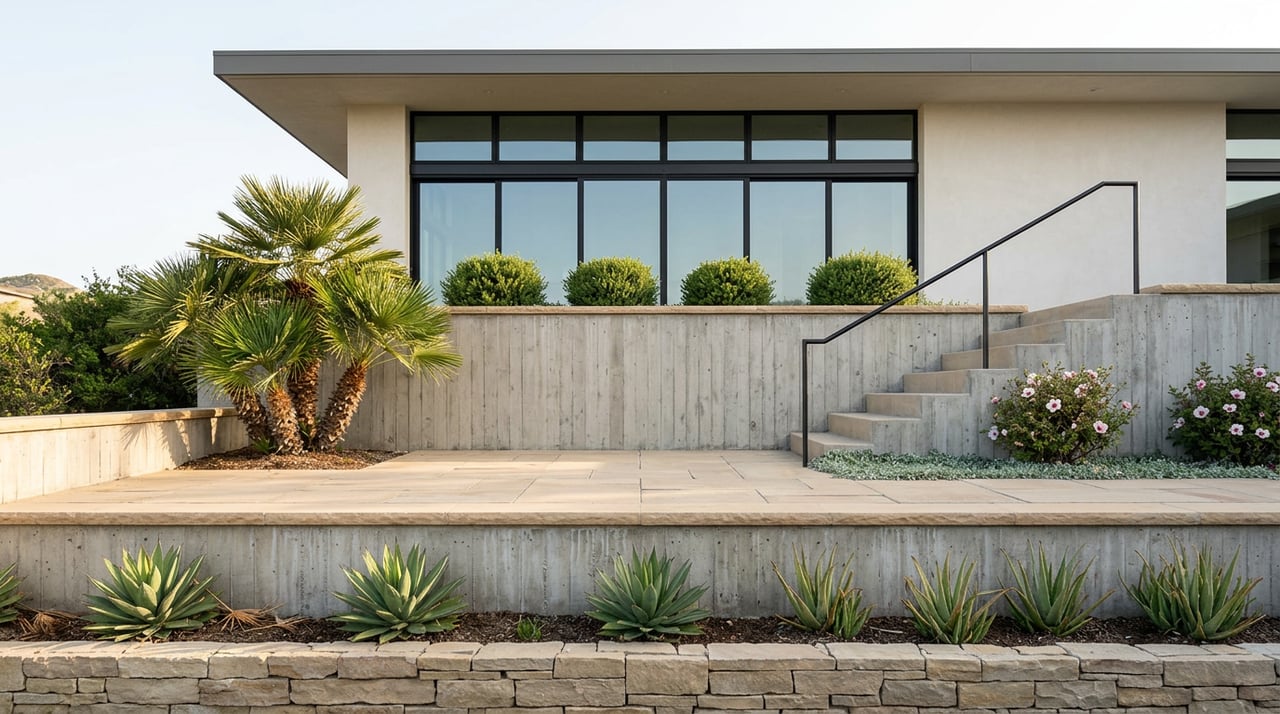
Point Loma sits inside San Diego's hillside overlay zone, alongside La Jolla, Mt. Helix, the Del Mar bluffs, and parts of Rancho Santa Fe. In these zones, the city requires a geotechnical report before the building department will even accept a retaining wall permit application. That report evaluates soil composition, slope stability, and groundwater conditions, and typically runs $2,500 to $6,000. If the wall in question holds back a driveway, a pool, or a slope steeper than 1.5 horizontal to 1 vertical, it triggers a permit and stamped structural engineering regardless of the wall's height, a distinction that catches a lot of buyers off guard because a modest-looking two-foot wall holding up a motor court gets treated the same as a six-foot wall on flat ground. Add stamped engineering at $2,000 to $8,000 and permit fees of $500 to $2,500, and you're looking at real money before a single block gets laid.
Two active Point Loma Heights listings this year make the stakes tangible. One, a single-story home on a corner lot, came with a plan set already drawn for two ADUs and an upstairs addition promising unobstructed 360-degree ocean views, the kind of project that lives or dies on whatever the hillside grading and retaining requirements turn out to be once a buyer actually pulls permits. The other, the 2022 custom build mentioned earlier, shows what the finished version of that bet looks like: the guest house, the rooftop deck, the panoramic sightlines, all sitting on infrastructure that almost certainly required exactly this kind of geotechnical and structural sign-off before it broke ground.
That's the piece the median can't show you. A flatland condo in a 1990s or 2000s-era building carries none of this cost structure. A hillside custom home carries all of it, embedded in the price long before a buyer sees the listing photos.
What This Means If You're Comparing Neighborhoods on a Budget
If you're using the median price to decide whether Point Loma Heights fits your budget compared to another San Diego neighborhood, ask for property-type-filtered comps instead of the neighborhood-wide number. A condo buyer with $600,000 to $900,000 is shopping a real, deep pool of inventory here, anchored by established communities near Dusty Rhodes Park and its dog park, or within reach of Sunset Cliffs Natural Park and Robb Field Skate Park. A buyer chasing a detached hillside home with a view needs a materially different number in mind, and needs to budget separately for what the hillside overlay zone might require if any addition, ADU, or new retaining structure is part of the plan.
If you're looking at a specific hillside lot, ask the listing agent directly whether a geotechnical report or soils history already exists for the property. It's a fair question at any price point in this neighborhood, and the answer changes what your total project cost actually looks like if you're planning to build.
FAQ
Does the hillside overlay rule apply to condos and townhomes too, or just detached homes? The rule is triggered by grading and retaining wall work, not by property type on paper. In practice, established condo and townhome communities here were largely built out decades ago, so new retaining wall triggers are far more likely to come up on detached lots where an owner is adding an ADU, a pool, or a hillside addition rather than in an existing multi-unit building's common areas.
Why does the average sale price run so far above the median in this neighborhood? Because the mix is lopsided. A larger number of condo and townhome sales in the few-hundred-thousand to low-seven-figure range anchor the median, while a small number of detached, view-lot sales up into the multi-million range pull the average upward without moving the median much at all.
How do I make sure I'm comparing the right price when I look at this neighborhood against another one? Ask for comps filtered by property type and, ideally, by elevation or view status, not the blended neighborhood median. That single filter will tell you more about what your specific budget buys here than any headline number on a search results page.
You can review the boundaries and planning policies for the broader Peninsula area directly on the City of San Diego's Point Loma community page, which is worth a look before you assume what's buildable on any specific lot.
If you're trying to figure out which side of that median your target street actually falls on, or what a hillside lot's retaining and grading history might mean for your plans, the Dream Homes Team can pull property-type-specific comps for Point Loma Heights and walk you through what your budget really buys before you write an offer. Request a Free Home Valuation to start with real numbers instead of a blended average.